Total Time Coded
4083h39m
since sep 2 2024

Dashboard
Real-time coding statistics from WakaTime. Tracking my development journey across all projects and languages.

Total Time Coded
since sep 2 2024
Daily Average
Over a Year
Best Day
Mar 31, 2025
Live synced from WakaTime
•Updated at 11:20 AM
A quick view of my activity and open-source contribution streak on GitHub.
Visitors, visits, and page views from Umami since Oct 18, 2024. Recent sessions show the latest 3 visits.
46,216
Unique people
57,133
Sessions started
112,371
Pages opened
Homepage visit
 US•Oct 29, 11:06 AM
Homepage visit
 SG•Oct 29, 09:40 AM
Homepage visit
US•Oct 29, 09:15 AMViews and reactions across all blog posts.
Sorted by Most Views
Latest articles I saved on daily.dev.

Almost nobody pays attention to web standards anymore
A study by independent developer Théo Ducreux, using his project ValidateHTML, scanned the 5,000 most-visited web domains and found that 87.2 percent violate HTML or CSS specifications, with only 12.8 percent fully valid and just 2.6 percent producing zero errors or warnings. Over a third failed accessibility checks, with 20.4 percent missing alt text and 41.6 percent missing ARIA labels. The most common issue, found in over 59 percent of sites, is incorrect tag nesting, which Ducreux attributes largely to front-end frameworks generating malformed markup at build time rather than developers writing it by hand. Browsers' permissive error recovery is blamed for letting sloppy code persist, since it renders fine in Chrome but can break for screen readers, AI agents, voice assistants, and translation tools that lack the same forgiving heuristics.

Im going back to writing code by hand
A developer spent 7 months vibe-coding a GPU-aware Kubernetes TUI (k10s) with Claude, then archived it after the codebase collapsed under its own weight. The post dissects five concrete failure patterns that emerge from AI-assisted coding without architectural guardrails: AI builds features not architecture (leading to god objects), the god object as default AI artifact, velocity illusion causing scope creep, positional data as a time bomb, and AI mishandling state transitions causing data races. Each tenet includes real code examples from the failed codebase and specific CLAUDE.md/AGENTS.md directives to prevent the same mistakes. The author is rewriting from scratch in Rust, doing architecture design by hand before any AI-generated code.

Turbopack: What's New in Next.js 16.2
Next.js 16.2 ships several Turbopack improvements: Server Fast Refresh brings fine-grained server-side hot reloading that reloads only changed modules, delivering 67–100% faster app refresh and 400–900% faster compile times. Other additions include Subresource Integrity (SRI) support for JavaScript files, tree shaking of destructured dynamic imports, inline loader configuration via import attributes, experimental LightningCSS feature flags, log filtering with `ignoreIssue`, `postcss.config.ts` support, and a fix for Web Worker origin resolution. Over 200 bug fixes and internal optimizations also improve memory usage and build stability.

React survey shows TanStack gains, doubts over server components
The 2025 State of React survey by Devographics, with over 3,700 respondents, reveals growing enthusiasm for TanStack while Next.js faces criticism over complexity and Vercel vendor lock-in. TanStack Query enjoys 68% usage and strong positive sentiment, while TanStack Start is gaining traction despite being in release candidate phase. React Server Components remain controversial, with many developers skeptical about server-side React. The React Compiler is well-received, with 62% expressing enthusiasm. AI-assisted coding is seen as a factor that could further entrench React's dominance as the default UI framework.

A desktop made for one
A developer shares their experience building an entire personal desktop environment from scratch over a few weeks, replacing every standard tool with custom software. The stack has two layers: CHasm (pure x86_64 assembly, no libc) handling low-level display and input, and Fe₂O₃ (Rust applications on a shared TUI library called crust) for applications like a text editor, file manager, email client, and more. Claude Code was used as an AI coding assistant to accelerate development. The author replaced vim after 25 years with a custom modal editor called scribe, built in 72 hours. The core argument is that AI-assisted development and Rust have dramatically lowered the cost of building personal tools, making a fully custom desktop environment feasible in weekends rather than years. The post celebrates building software for an audience of one — no configurability, no documentation, no compromises.

PHP's biggest problem
PHP's biggest problem isn't the language quality, ecosystem, or tooling — it's marketing. Drawing on experience at JetBrains and observing Laravel's success, the author argues the PHP Foundation should invest in a modern website redesign, full-time documentation work, conference outreach beyond the PHP community, active social media presence across all major platforms, accessible internals communication, and deliberate marketing of new language features. These efforts would likely require three to four full-time roles but are seen as essential for PHP's long-term prosperity.
The last few songs I played on Spotify, via Last.fm.
Aawaz
MC Flo · Aawaz

Mero Manaiko Phool Tipi
Roshan Limbu · Mero Manaiko Phool Tipi
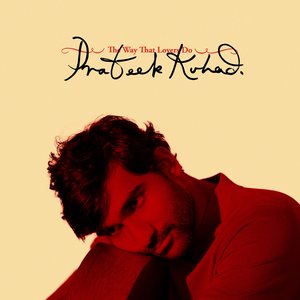
Co2
Prateek Kuhad · The Way That Lovers Do

Dherai (feat. Lochan Bhattarai)
Topi · Mitho Bihani

Ajambari
Monkey Temple Nepal · Monkey Temple Nepal

Chadai Au
Sarin Tamang · Chadai au

Raanjhan (From "Do Patti")
Sachet-Parampara · Raanjhan (From "Do Patti")

Pehli Dafa
Atif Aslam · Pehli Dafa
This page is inspired by Theodorus Clarence (Blog stats)and Victor Eke (Contribution Graph).